6 events in 9 days: Canadian Para nordic skier Hudak not allowing lingering injury slow her down in Italy

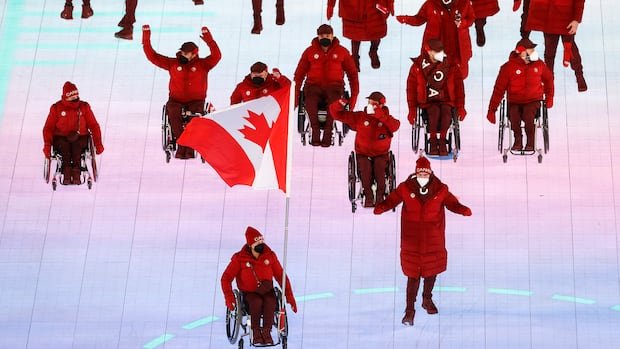
After over a decade on the world stage, Canadian Para nordic skier Brittany Hudak is taking on one of her biggest challenges yet. Set to begin a marathon stretch of six events in nine days at the Paralympics in Italy, Hudak is facing a relentless schedule while still managing the longest injury of her career.
After suffering an off-season knee injury in 2024, Hudak had to alter her training approach and work tirelessly to get back to where she needs to be. She has three Paralympics under her belt, including the same heavy schedule four years ago in Beijing, but competing with a knee that’s still “on the mend” is an entirely different mountain to climb.
“I think my body’s been through it the last few years of high-performance sport. It kind of just wears you down,” Hudak told CBC Sports.
Hudak was diagnosed with a long-term overuse injury called Patellofemoral pain syndrome, part of the wear and tear that comes from a decade-plus career on skis. She switched to a more “strength-focused” training regimen while working with a physiotherapist, strength coach and massage therapist to try to get back to full health.
“I’m in a really fortunate position to have a good team behind me that works with me daily to kind of recognize what I need and what’s going to make that difference,” Hudak said.
It’s part of the reason why Hudak, now 32 years old, was still able to put together a remarkably consistent and successful 2025-26 Para biathlon World Cup season. The Prince Albert, Sask., native finished second in the overall rankings for the women’s standing division, behind Paralympic teammate Natalie Wilkie.
Hudak’s trademark endurance and sharp shooting on the range helped her finish third in the 12.5-kilometre individual event at the World Cup Finals in Poland in January, capping a season that saw her capture three bronze medals despite the lingering injury.
“I was fortunate that I was able to still race last season and this season, and my knee is definitely improved a lot from a year ago, but it’s still kind of on the mend,” said Hudak, who also competes in Para cross-country.
Another reason Hudak has prevailed through the pain is her mental strength, with a level of commitment to the rehabilitation process that even impressed head coach Brian McKeever, Canada’s most successful winter Paralympian.

Devin Heroux joins CBC Paralympics digital studio host Allison Lang from Cortina, Italy to set the scene just days ahead of the Winter Paralympics opening ceremony.
McKeever, who will be at his first Games as a coach following a career that included 20 Paralympic medals, said Hudak ultimately took control of her injury rehab.
“I think the fact that she’s driving it is the important piece. Coaches and therapists can all [offer] their input, but the athlete is the one that has to drive that because they’re the one that needs to believe in it,” McKeever said.
“To be able to do that as an athlete, to say, ‘this is now my rehab,’ she’s taking control of that and saying, ‘this is what I need now.’ She’s taking ownership over that, and that shows maturity and that she’s committed to the process.”
Aiming for 4th Paralympic medal
Hudak, a co-captain of Canada’s Paralympic delegation, will be gunning for a fourth career Paralympic medal when competition kicks off at the Tesero Cross-Country Skiing Stadium in Val di Fiemme. She is set to compete in three biathlon events and three cross-country events.
Hudak is no stranger to the Paralympic podium, having reached it at every Games aside from her 2014 debut in Sochi, Russia. She took bronze in the 12.5km individual biathlon at the 2018 edition in Peyongchang, South Korea, which she repeated in Beijing while adding cross-country bronze in the 15km classic.
“In this sport, you can do it for so many years and you’re still refining your ski technique,” Hudak said. “There’s always little tweaks or inefficiencies. That’s what keeps me coming back — you just want to be better.”
WATCH | Hudak earns individual biathlon bronze at Beijing 2022:
Her gauntlet of events in Italy kicks off with the individual biathlon event on Saturday at 6 a.m. ET, a race that McKeever has had highlighted on the calendar. It has more shooting rounds and a longer distance than her other scheduled biathlon events — the sprint and sprint pursuit — which favours an athlete with a gas tank the size of Hudak’s.
“She’s quite a diesel beast,” McKeever said. “You put her out for a long workout and she can just go and go … She’s an excellent shot when she’s on, and she’s a very good distance skier.”
Watch the Milano Cortina Paralympics with a free account on the CBC Gem app or CBC Gem website. The full schedule can be viewed here.
But her schedule in Italy will look a bit different than it did in 2022, as the long-distance cross-country event has been extended to 20km and switched from a classic to a free skate technique. But it’s a change that could benefit Hudak.
“The pain that she was having was more present in classic skiing,” McKeever said. “Skating was a little bit easier on her body. Skating is a slightly slower firing pattern for the kick than classic is.”
She is also scheduled to compete in the sprint classic and the 10km classic in cross-country.

But Hudak said a return to the Paralympic podium takes more than technical fine-tuning and training hours; it’s every bit as dependent upon that same mental strength that got her through the toughest days of her injury.
“Honestly, it’s just still having the belief in myself. That’s number one. If you believe that you can win a race, you’re going to be more likely to win it,” Hudak said. “Having that belief, and then just being able to trust in your process and remembering that the work has been done when you get there.
“Sometimes we start stressing about all the little things when we’re at the competition, but the work part is done. Now you’re just executing.”
Rocky Mountain High
While the past year-and-a-half has featured less high-intensity race prep than previous years for Hudak, who lives and trains in Canmore, Alta., her love for trail running has made a big difference — both physically and mentally.
“Sport brought me to the Rocky Mountains, and it really shaped the person that I became,” Hudak said. “Trail running became a huge passion of mine, and just living a more active lifestyle, and how much that helped my own mental health too.
“I love just spending time outside. I think that’s why I find it easier to do the long training hours in the sport.”
It was a natural fit for Hudak, who grew up competing in cross-country running and track and field.
McKeever said the mountains have become Hudak’s “happy place,” and all that trail running has paid dividends on race days.
“You can see where that fitness shows up in the longer distances. It’s those base miles that were put in over years that allowed her to stay in the kind of shape she would like to be in.”
A former teammate of Hudak’s for years, McKeever is feeling good about her readiness with the Games about to commence.
“I’m very encouraged with where she’s at,” McKeever said. “…She’s coming into some good shape, and I’m just excited to see where she can end up.
Source link