Can Grand Slam Track craft a new narrative after botched rookie season that led to bankruptcy?

Back in June I made a guest appearance on CBC Sports’ online series “Trackside,” to discuss the implications of Grand Slam Track cancelling their season finale. The task: don my sports business reporter hat, and help the hosts and audience unravel GST’s corporate spin regarding the premature end to the league’s rookie season.
Lease deal this, travel costs that…
Sounded to me like they had simply run out of money, and I said so. If year two was coming, any athlete signing up needed a briefcase full of cash just to know GST meant what they said about delivering quit-your-day-job money.
Six months later, I’m here to apologize.
I said GST ran out of money, but I was wrong.
A steady stream of news leaks, public statements and a mid-December bankruptcy filing have made clear that they never had it.
At least not enough to cover six-figure winners’ cheques that aimed to change professional track’s pay scale.
Not enough to cover the content and marketing deal it had struck with Citius Mag, the U.S.-based, track-centric media company.
And nowhere near enough to pay for the professional-quality broadcasts that streamed on CBCSports.ca in Canada, and aired on the CW Network south of the border.
TRACKSIDE | Morgan Campbell weighs in on what happened to Grand Slam Track:
According to an August report in The Athletic, the circuit’s primary funder, the asset-management firm Eldridge, saw the anemic crowds for the kickoff event in Kingston, Jamaica, and decided against following through on the investment it had pledged in a non-binding term sheet.
So GST, it’s now clear, had some of the sport’s top athletes turning in world-leading performances for significantly less than the promise of a big payday. I’d call it an IOU, but if the term sheet was non-binding, Eldridge didn’t owe GST anything, technically.
With Season One done and Season Two buffering, we could second-guess decisions that GST leadership, fronted by Olympic legend Micheal Johnson, undertook – but that’s too easy. If the question is, “what should they have done differently?” the answer is “almost everything.”
Looking at it that way doesn’t help us understand the situation, how we landed here, and what might change if Grand Slam Track manages a second season.
Instead, we can evaluate GST outside the specific context of elite track and field, and alongside other notable North American sports startups, and search for through-lines.
Successful newcomers either have deep reserves of money, or they tell a compelling story that gets new fans invested. Grand Slam Track lacked both, and it’s not clear how it’ll reclaim either if it hopes to return in 2026.
The prospect of a second season remains an issue because GST filed for Chapter 11 bankruptcy, which permits a business to continue operating while it restructures its debts. And GST’s creditors, made plain in a list included in the filing, are numerous, and waiting for significant sums.
- Momentum-CHP, a production company, owed more than $3 million US.
- Girraphic, a London, U.K.-based graphics firm is waiting on more than $690,000.
- Sydney McLaughlin-Levrone, who is owed $356,250, tops a long list of athletes still due six-figure payouts.
Up until now, GST’s public statements have maintained that the league plans to return for year two – but how? Can they make those debts disappear? How will they attract new talent? Find new followers while keeping avid track fans happy?
Storytelling
Maybe they wouldn’t face those questions now if they had answered a more fundamental one before the league launched:
What’s Grand Slam Track’s story?
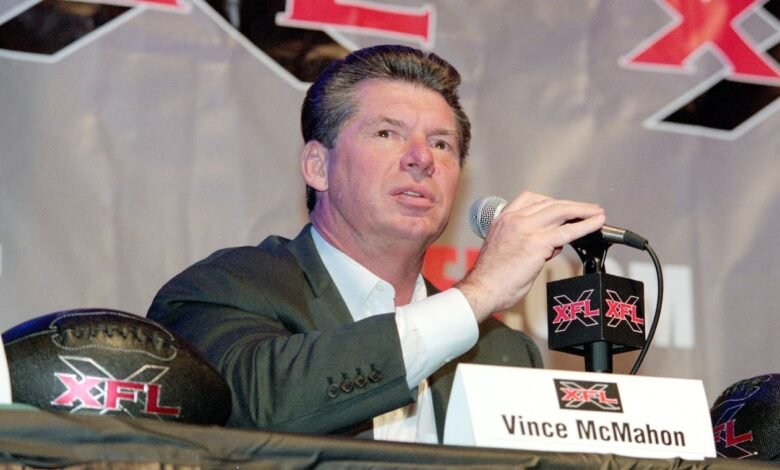
Think, for example, about the XFL, the pro football league that WWE honcho Vince McMahon conjured from thin air back in 2001, on the shaky premise that football fans craved more sex and violence than the NFL already served them. Raunchy, risqué, and savage are adjectives you can string together to describe the league’s attitude, and its half-formed identity. But they couldn’t form a coherent story, or compensate for the reality that the XFL was McMahon’s solution to a problem that didn’t exist.
The XFL fizzled after one season.
Contrast that with the Ultimate Fighting Championship, which used the first season of The Ultimate Fighter reality TV series to set the stage for their first network TV event, and introduce new fans to the promotion’s incumbent and emerging stars. UFC braintrust didn’t present these fighters as straight-from-the-back-alley brawlers. They were portrayed as high-level athletes who channeled their ability into a brand new sport called mixed martial arts.
That’s a story.
And the promotion’s tagline – As Real as It Gets – fit the action their televised fight cards delivered. It was fast and violent, with a whiff of the old taboo from the sport’s underground freak show past, but it was also organized, standardized and sanctioned, with the media reach to help the UFC take a niche sport mainstream.
Grand Slam Track lands at the XFL in this spectrum. A new league in recognizable sport that lacked a coherent story to signal to fans that it offered a worthwhile update to what they’d already been watching.

Like the UFC, Grand Slam Track had a catchy tagline: Only the Fastest.
But a slogan is like a logo. It doesn’t, by itself, define your brand. To paraphrase the title of that must-read marketing book, a brand is what people think of you. And people’s opinion comes back to the story you’re able to sell them.
Jake Paul’s boxing career is a case in point.
Why does he headline main events on Netflix even though his skills are more suited to local cable? Because some nights he successfully packages himself as the late starter who triumphs against long odds (see: his win over 58-year-old Mike Tyson). And other nights presents himself as the fast-improving contender set to disrupt the heavyweight and cruiserweight divisions.
That second approach has hard limits, like Paul’s small toolkit, and his (in)ability to take a punch from a hard-hitting heavyweight like Anthony Joshua. But that strategy does numbers. Roughly 33 million people watched Joshua break Paul’s jaw, not because Paul was boxer enough to threaten the former champ, but because the former YouTuber had people invested in the story.
Grand Slam Track’s story so far?
It has people gawking. The top GST results on ESPN’s website all deal with cancellations, missed payments and bankruptcy. But online rubberneckers can’t rebuild your brand, especially if all they know about your company is the promises it didn’t keep.
And without a wealthy investor to make the season one debt disappear, I’m not sure how GST can craft a new narrative for year two.
Source link