Chris Jones reports from Italy ahead of the Milano Cortina Olympics.
The singing never stopped at San Siro on Sunday night, not until long after Inter Milan had dismantled Bologna, and the joyous home supporters had expressed their appreciation enough.
Olympic organizers must be hoping for a similarly enthusiastic chorus when the same stadium hosts the Opening Ceremony on Feb. 6.
Whether this soccer capital — Inter and AC Milan are the city’s undisputed sporting giants — will find its appetite for hockey and figure skating remains a worrisome question.
A month out, Milano Cortina 2026 is shaping up to be a muted Olympics. With venues spread across four different clusters in northern Italy and slow ticket sales among locals, it’s all feeling a little thin.
In Milan, for the moment, the Olympics are close to invisible, except for the unkind attention brought by the Milano Santagiulia hockey arena, still under obvious construction.

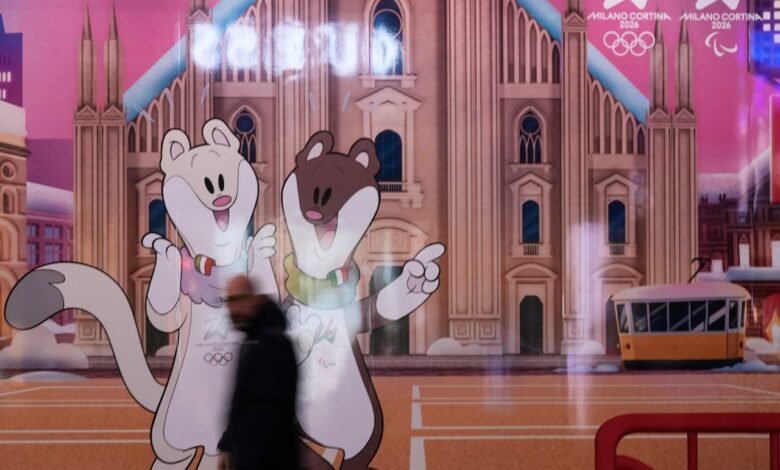
A temporary store in the city’s famed Piazza del Duomo is the only other reminder of glories to come, but the thousands of weekend visitors to the square were more taken with the towering Christmas tree still occupying it.
The city’s other venues are makeshift and far afield. Figure skating and long track speed skating will be held in Assago, to the south. A second, smaller hockey rink and short track speed skating will be housed at Fiera Milano, a sprawling collection of exhibit halls in Rho, far to the west.
The entire complex, which looks more like an enormous import-export operation, was locked up and silent on Sunday, unless a train streaked past.

Apart from the Milano Santagiulia, the only purpose-built site in the city is its athletes’ village, one of six dotting northern Italy. Curlers won’t meet hockey players at these Olympics. Freestyle skiers won’t compare their adrenaline rushes over breakfast with lugers.
Milan’s housing, although modest in size compared to past iterations, remains divisive among locals. Some see elegance in its sharp-cornered apartment blocks. Others have found something cold, even Soviet, about them.
“Milanograd,” one Google review reads.

At least it’s nearly complete. On Sunday morning, a man walked between buildings with a clipboard, ticking off boxes on his checklist. The village was still surrounded by construction barriers, but promising white curtains filled each apartment window.
In smaller co-host cities, like Cortina and Livigno, the Olympics will no doubt feel more immediate and festive, given spectacular backdrops and an intimate scale. The mountains are finished, and they are beautiful.
But in Milan — where there’s no snow and so much else to do — the fates of Inter and AC Milan, locked in a desperate Serie A title fight, seem much more pressing.
Maybe Milano Cortina is the future of modern, lower-impact mega-events: less romantic for athletes and visitors, but more economical and environmentally sound for the hosts.
Too many previous global competitions — the 2010 men’s World Cup in South Africa, the 2016 Summer Olympics in Brazil — have been failed showcases, with expensive, abandoned infrastructure in countries that can’t afford it. And countries that can have been less inclined to host, fearing spiralling costs and uncertain returns.
Milano Cortina, cautious and restrained, is relying almost entirely on existing facilities, and there are plans for all of them after the closing ceremony in Verona. Milan’s Olympic village, for instance, will become housing for 1,300 students after the medallists move out.
Even the hockey arena, as problematic as it has been, is privately financed and will become Milan’s most notable indoor sports and entertainment space.
In the eternal battle between short- and long-term thinking, maybe it’s a win when long-term thinking takes a momentary lead.

There was another reason for optimism at San Siro on Sunday night.
There were tens of thousands of them, in fact.
San Siro is massive, but it’s hardly magnificent. It’s a mountain of poured concrete topped by red steel, cold-faced and brutalist, slated for demolition.
It’s the crowds, not the architecture, that turn each soccer game into an unforgettable experience. It’s the passion that’s plain in their cheering. It’s the gooseflesh that’s made by their songs.
Outside the Olympic village, plywood hoarding still runs along one street. It’s been painted with murals of athletes, carving ice with their skates, sweeping around slalom gates.
“PROVE THEM WRONG,” one reads in big block letters, an exhortation for the men and women who will soon stay and compete here.
It might also be a message for all of Milan.
Source link


