For the second year in a row, Ottawa Charge GM Mike Hirshfeld watched his first-round pick from the year before be plucked away by an expansion team.
This time, it was promising, physical defender Rory Guilday walking out the door.
“She’s a heck of a player,” Hirshfeld said last week, just after the league’s entry draft. “She was just starting to make really great strides the second half of the season into the playoffs, and then she’s on her way.”
Charge fans aren’t alone. Two years in a row, the Montreal Victoire lost a young, top defender to a new team. First it was Cayla Barnes, and then Nicole Gosling.
But after three seasons of growing pains, stability seems to be on the way for the PWHL.
“There are no short-term plans for more teams or individual ownerships or more fundraising — none of those things are on our near-term menu of items to be discussed,” PWHL advisory board member Stan Kasten told CBC Sports this week. “Right now, we need to stand up four teams in a little bit of time.”

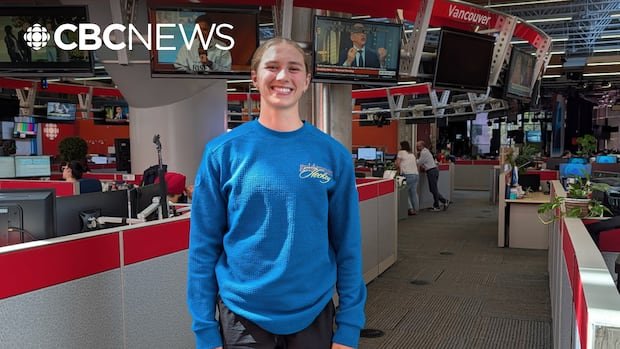
American hockey defender Caroline (KK) Harvey has had an array of honours in the last year, as the MVP of the 2026 Olympic tournament and the International Ice Hockey Federation’s Female Player of the Year. After being selected No. 1 overall by the Professional Women’s Hockey League’s Vancouver Goldeneyes, she spoke to the CBC’s On The Coast on her first day in the city and what mentality she hopes to bring to the team.
With a cash infusion from the league’s first outside investors, the PWHL’s leaders are focused on building a 12-team league that remains owned and operated by one entity: The Walter Group.
That stability means the GMs of those teams can finally focus on building long term, too.
“We’re real excited for the league to have this growth in expansion and all that stuff,” Hirshfeld said. “But for all of us who’ve been building and developing, and spending so much time working on that part of the game, to have players stay with your program for two, three, four years, that’s what’s exciting.”
For fans who’ve watched their favourite players switch teams and rosters be shaken around like dice in a Yahtzee cup, it will be a welcome change.
It comes at a time when the league is flush with new, young talent, in what might be the most talented draft class since the league’s first player dispersal draft in 2024.
Players like Caroline Harvey (Vancouver Goldeneyes), Laila Edwards (PWHL San Jose) and Tessa Janecke (PWHL Las Vegas) are poised to take the league by storm. All three became Olympic gold medallists before they played a minute in the PWHL, and all three should be cornerstones of their teams for years to come.
A refresh
For some teams, rebuilding could take longer.
The Toronto Sceptres, the top team in the PWHL just two seasons ago, seem likely to struggle to score goals again, without four of last season’s top five scorers. That includes top scorer Daryl Watts, who was signed by expansion PWHL Detroit.
Watts was on an expiring contract, which means Toronto could only protect her from expansion teams if she was re-signed to a new contract within a specific window, which didn’t come to fruition.

Even with American Kirsten Simms, who was a steal for the Sceptres at eighth overall, things look bleak.
“The players up front we lost were big pieces of our puzzle,” Toronto GM Gina Kingsbury said after the draft. “This is almost like a refresh. We’re kind of building something new here as we move forward.”
Plenty of Sceptres fans questioned the league’s decision to give Toronto the eighth pick in each round of the draft, slotting the expansion teams ahead of both the Sceptres and the New York Sirens, two teams that missed the playoffs.
The goal behind that decision, and behind so many decisions the PWHL has made since Day 1, is parity, PWHL executive vice president of hockey operations, Jayna Hefford, told reporters last week.
“We went through the distribution process and really evaluating where rosters were at through that process and trying to build out 12 competitive teams,” Hefford said. “You can say even, but we’re never really going to know. We look at what happened last year and I think it’s pretty safe to say almost everyone in this room thought that Vancouver and Seattle were going to be playing for the Walter Cup. These things are tough to predict.”
In a league owned by one entity, where every team has the same resources, the goal is always the greater good of the league over any individual team, something that may not always be popular with a fan of a team.
It’s unconventional if your point of comparison is the NHL, where every team has a different owner and different interests.

“We don’t have to conduct our business the way every other league does,” the league’s executive vice president of business operations, Amy Scheer, said. “It’s wonderful that you guys compare us to everybody because it’s wonderful to be in that company. But it’s really fun to wake up every day and get to think about how we run the league and we run our teams in a way that benefits all 12 markets, not just one more than any other.”
The PWHL’s leaders feel it’s a structure that has helped the league scale up faster than expected.
With an advisory board of four people, it means decisions around things like expansion and outside investment can be made faster and easier, Kasten said.
He speaks from experience, having worked with teams in the NHL, MLB and NBA over four decades.
“The single-entity structure that we have is what makes all of this possible, and I know people who aren’t used to this construct have a really hard time digesting it,” he said. “This could not have been done this quickly or this amicably with six or eight different owners with different agendas and different budgets and different time constraints and different political considerations in their city.”
The coveted U.S. broadcast rights deal
Beyond building teams from scratch in four new markets, the next item on the horizon for the PWHL is a coveted U.S. broadcast rights deal that could bring in significant revenue.
While the broadcast landscape for the league’s fourth year, expected to start sometime in the late fall, is “pretty much set already,” the eye is on the future, Kasten said.
“For year five, we’re hoping we can make quite a bit of improvements in our media delivery packages,” he said.

What exactly that looks like isn’t yet clear. Scripps Sports-owned ION was the first network to broadcast PWHL games nationally in the U.S. last season, and Scheer said the league will see where that partnership goes.
“A lot of conversations out there, but it’s got to be the right deal for us in terms of the way they value us,” she said. “So when that deal comes along, and again, we’ve had multiple conversations, we’ll do it. But we don’t want to compromise how we value ourselves to do it.”
The league’s Takeover Tour is slated to be back next season, with some repeat markets and some new ones, too.
While further expansion isn’t on the immediate horizon, the league has always looked at those games as a chance to broaden access to its brand.
When the time comes to expand eventually, there are plenty of cities in line, Kasten said.
But at this point, teams have outgrown 5,000-seat arenas. Three out of four of the expansion teams will be playing in NHL buildings. The fourth, Hamilton, is playing in the recently-renovated TD Coliseum, which can seat around 18,000 fans.
“We need to play in that city’s biggest building, its NHL building, and those buildings are full two years ahead of time, three years ahead of time,” Kasten said. “That has been the problem in many, many cities. They just don’t have available dates for us yet, but they will in the future and surely they’ll have a team in the future.”
‘It hurts, but I’m super excited’
While the PWHL continues to grow, adding four new teams has been one way to give more players a bigger piece of the pie. With more roster spots available, some players are getting raises.
But overall, salaries are unlikely to grow significantly until the collective bargaining agreement between the league and players expires in 2031. In the current contract, salaries increase by three per cent each season.
For many players, it will be a season of new beginnings in a new place.
Players like Alina Müller, who spent the last eight seasons playing in Boston between college and the PWHL, is starting fresh with PWHL Hamilton.

After the Fleet left their alternate captain and top-two scorer unprotected, Müller had conversations with expansion GMs. She connected with Hamilton GM Meghan Duggan’s vision.
Speaking to reporters earlier this month, after her signing was announced, Müller said what so many players have likely been feeling over the past few weeks of chaos, excitement and change.
“It hurts, but I’m super excited for this new opportunity,” she said.
Source link