Despite decades of initiatives, gender equity among high-performance coaches remains an Olympic dream

At the 2024 Paris Olympics, Team Canada sent its largest women’s contingent in history – making up more than 60 per cent of the athletes. Yet, the sidelines told a different story: only 19 per cent of the coaching staff were women.
For the Milano-Cortina Olympics, that figure is projected to be near 10 per cent.
Despite decades of gender equity initiatives, these coaching figures have remained stagnant. The lack of progress raises a question: was the federal government’s 2018 commitment to achieving gender equity across all levels of sport by 2035 a realistic goal?
While women in sectors outside of sport have seen gains, elite sport remains an insulated environment. Family responsibilities, a culture that narrowly defines leadership, and the constant questioning of female authority continue to push talented coaches out of the profession.
“The leadership of sport hasn’t changed,” former Sailing Canada coach and Olympian Lisa Ross said. “It is still of a generation that doesn’t see women competing with men, being alongside men, or hearing them as leaders.”
Since 2016, women have consistently made up less than one-fifth of Olympic coaches for Summer Games; for Winter Games, roughly one-10th. Canada slightly outperforms the global Olympic average of 13 per cent, despite spending less on high-performance sport than the U.S. or the U.K.
This international success may be the result of million-dollar investments into programming aimed to support women’s coaching development. In 2022, the federal government renewed $25.3 million dollars over three years for gender equity in sport, with part of that funding dedicated to increasing the number of women in coaching and leadership positions.

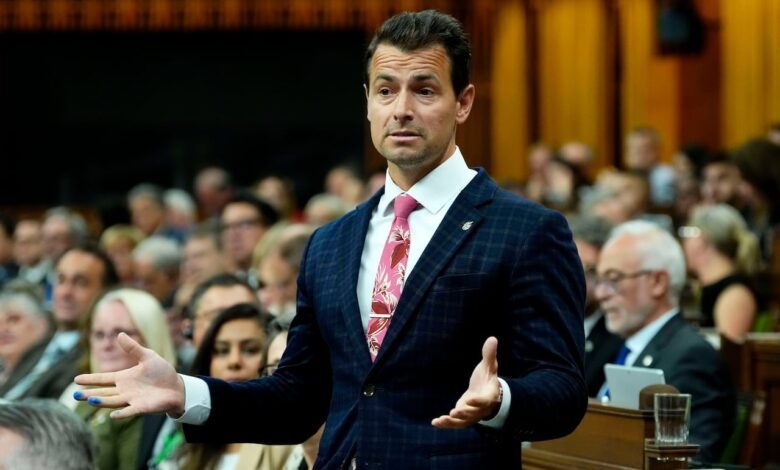
The secretary of sport, former Olympian Adam van Koeverden, acknowledges that while the “volume of progress is unsatisfactory,” the government is betting on an exponential rather than linear growth model. This strategy prioritized first understanding the root causes of the gap.
“Research yields unsatisfactory tangible results in the sense that first, we need insight so we can challenge and tackle the problem from a data perspective,” van Koeverden said. “Without bold goals and aspirations and ambition, you achieve nothing. So the goal remains very, very important, and I believe it is achievable to see equity in sport by 2035.”
The federal investment in coach development operates alongside a specific set of national standards. To coach at the Olympic level in Canada, individuals must meet rigorous technical and safety requirements.
This includes achieving high-level certification through the National Coaching Certification Program (NCCP) or holding an Advanced Coaching Diploma. Additionally, under the Safe Sport mandate, every Olympic coach must undergo ethics training and background checks.
While individual National Sport Organizations (NSOs) nominate their own staff, the Canadian Olympic Committee (COC) requires verification that every coach meets these benchmarks for professionalism and conduct.
From the government’s perspective, the data is being gathered and the standards are set. But for the coaches currently navigating the pipeline, the question remains whether this exponential growth will arrive in time for the 2035 deadline.
Over the past few years, high-profile reports of abusive coaching have put a spotlight on the culture of sport, leading critics to question the “win at all costs” mentality.
For basketball coach Allison McNeill, who led Team Canada at the 2012 Olympics and now mentors women coaches, this culture does more than harm athletes, it shapes the opportunities women receive.

McNeill argues that coaching opportunities are often filtered through a narrow, masculine stereotype that prioritizes tradition over variety.
“There are not more women coaches because people look at it only one way … there is one dominant type of coach,” McNeill said. “Men have coached for years with a mentality of being aggressive and loud. It’s not the only way, but people equate that style with winning.”
These perceptions create a “glass ceiling” where women are often restricted to coaching women’s teams, while men dominate positions across both genders.
McNeill recalls the imbalance clearly: “If I had applied for the men’s national team, there is no way I would have gotten an interview. But if the men’s coach wanted to come our way, they probably would have interviewed him.”
And when athletes don’t see women in leadership, they don’t see coaching as a viable career path.
“We’re not going to have enough women coaches because athletes don’t see it as an option,” Ross said. “They have all the skills, they’re Olympians in their own right … but because they don’t see themselves there, we don’t even know who we’re missing.”
For three-time Olympic mogul skier turned coach, Audrey Robichaud, that was the reality.
“From all my time on the national team, I’m the only woman that’s coaching. None of them were planning on giving back to sport, why is that?” Robichaud questioned.
The ‘motherhood penalty’
Robichaud credits a specific coaching grant for giving her the “head start” and confidence to stay in the system after she finished skiing at the 2018 Olympics. But even as her career begins, she is already weighing its longevity against the prospect of starting a family.
“Maybe one day I want to have a family, but I don’t if I’m capable of doing both … I want to say yes, I want to move up,” Robichaud said. “I want to keep doing this for a long time, but I don’t know if I’ll be able to, if I’m honest.”
In the world of elite skiing, defined by months of international travel, the “motherhood penalty” is both logistical and social.
“I’m not saying it’s not tough for fathers, but there are these expectations,” Robichaud said. “If mothers are doing it, sometimes we are seen as bad mothers, or we aren’t fully committed to sport or family. It’s really hard for anyone who wants to break that boundary.”
That fear is not unfounded. As reported by the CBC, Lisa Ross was fired from Sailing Canada in 2023, just nine days after she announced her pregnancy and intent to take maternity leave. The organization stated the dismissal was tied to a loss of funding for her role.
“Mothers are not welcome in high-performance sport,” Ross said bluntly.
Ross said many other coaches reached out to share similar experiences, confirming that for many women, motherhood is the end of an elite coaching career.
While women struggle to gain a foothold in elite coaching, the challenges are not uniformly applied. For women of colour, these barriers are compounded by racial biases that further narrow the already slim path to leadership.

Cheryl Jean-Paul, head basketball coach at Trinity Western University, describes the weight of being the “first” in a system that remains overwhelmingly homogenous.
“Being a ‘trailblazer’ is exhausting,” Jean-Paul said. “I’ve felt that in moments where I’ve been the first ‘fill in the blank,’ without many people to look to who are doing the same work.”
She adds that geography and sport context can intensify this isolation.
“I’m from Western Canada and if you’re a female athlete of colour, you could go into a tournament with thousands of athletes and there are maybe five of you,” Jean-Paul said. “Becoming a coach forces you to stand even further out, and it can be very scary.”
In response, Jean-Paul has worked deliberately to support and mentor women coaches of colour, and create opportunities that didn’t exist before – such as The Athlete Women Empowered Classic, a U Sports women’s basketball tournament to highlight Black women coaches.
“Younger Black female coaches have reached out to me and said, ‘I never even considered head coaching.’ I realized then how crucial it is to have visible role models and to create opportunities intentionally.”
These patterns extend beyond Canada. Even in professional leagues like the WNBA, a league built on the labour and visibility of Black women, there are currently no women of colour in head coaching positions for the upcoming season
“We’re progressing on so many fronts, but I think Black women are a group that tends to get left behind,” Jean-Paul said.
As Jean-Paul notes, when filling female coaching roles, organizations often rely on existing networks, so in homogeneous environments, women of colour simply aren’t considered.
Addressing these barriers won’t happen by chance. Jean-Paul emphasizes that allies within sport organizations need to be intentional by actively creating opportunities. Without this, systemic inequities persist, and talented women of colour remain underrepresented at every level of coaching.
While van Koeverden is optimistic Canada can meet its 2035 goal of gender equity in sport, the coaches interviewed were unanimous: no.
A time for action
For veteran coaches like McNeill and Ross, the time for “encouragement” has passed. They believe a reasonable path forward is a quota system tied directly to federal funding. It’s a proposal Ross has already taken to the Standing Committee on Canadian Heritage.
“Sport should look like Canada,” Ross said. “We have a 50/50 population and 50/50 representation among athletes at the Olympics, but we do not in our high-performance staff.”
Yet, even among women, the idea of quotas is complicated. Robichaud, who benefited from a Canada Games requirement that every sport include a woman on the coaching staff, admits to a personal dilemma.
“I want to go there because I am qualified, but I had to go because I am a woman and I’m taking someone else’s spot; it doesn’t feel right.”
She also recognized its upside. It opens opportunities that might otherwise never exist and allows women to prove themselves to their federations.
Jean-Paul offered a practical approach for those outside high-performance sport:
“Women need to stay involved. You don’t have to be the head coach to make an impact,” she said. “Ask your club why there aren’t more women on the sidelines. You have more power than you think.”
As it stands, Canada’s coaching landscape is at a crossroads. Grassroots pressure may change individual clubs, but the data suggests that without the “teeth” of structural intervention, the Olympic sidelines will remain a lonely place for women.
Until the system evolves to support mothers, mentors, and women of colour, Canada’s 2035 goal will remain exactly what it is today: an Olympic dream.
Source link