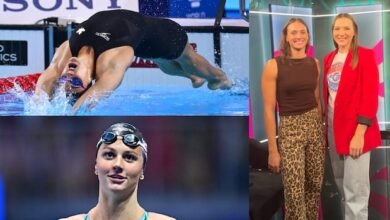
In what was a nice wrap-up to the U.S. Olympic hockey drama, this past weekend Saturday Night Live invited gold medallists Hilary Knight and Megan Keller from the women’s hockey team, to join Jack and Quinn Hughes from the gold-medallist men’s team for the opening monologue.
The skit, with host Connor Storie from Heated Rivalry, gave space to the women to have some fun with the Hughes brothers and take a jab at U.S. President Donald Trump, who was the catalyst of the post-game debacle after the men’s Olympic final. Knight called the comments “distasteful and unfortunate.”
The SNL appearance gave the players an opportunity to focus on hockey again, and offered audiences and fans some closure.
But has anything really changed when it comes to coverage of women’s hockey, or any sport for that matter? Why hasn’t it changed? As a journalist, I often ask: Is the media part of the problem?
It is unsurprising to find sexist attitudes alive and well, on and off the ice, in 2026. One could say that transparency and accountability are not staples of mainstream hockey culture.
But it is incumbent upon the media to challenge those narratives. In the U.S., the media have been asking the players who have settled back into their NHL teams about the locker room incident.
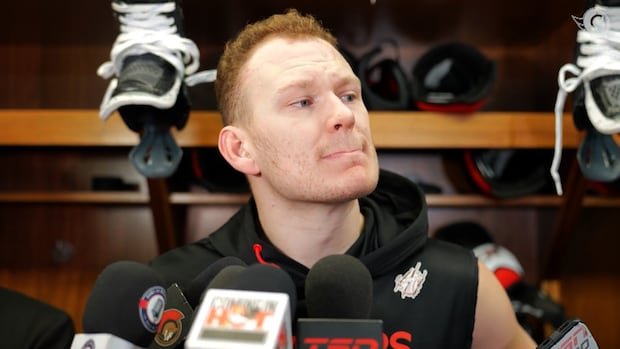
But where does Canadian hockey media fall in the fray? TSN reporter Claire Hanna covers the Ottawa Senators. She took the first opportunity to question U.S. team member and Senators captain Brady Tkachuk about why he laughed at Trump’s joke in the post-game celebration Feb. 22. Hanna shared a number of angry and sexist messages she got after doing her job.
Brady Tkachuk on why the USA Men’s team laughed with the US President:
“I don’t really have an answer. Honestly, it was just a whirlwind of a moment that you can’t really control what somebody says. It’s just – I guess caught off guard a little bit. You’re talking to the…
I attended the Toronto Maple Leafs skate Saturday morning with the intention of asking Auston Matthews, captain of the team and also of the U.S. men’s team, a similar question. To their credit, when I applied for accreditation, the Maple Leafs communications teams granted my request immediately although I am not on the regular Leafs beat, and it was my first Leafs media scrum. I was the only woman. I wanted to ask Matthews if he had a message for any of the fans who were offended by the incident, particularly in a city that has embraced the PWHL’s Sceptres. I was not able to penetrate the scrum around him, and he wrapped up quickly and walked away. No one else asked about it.
Christie Paschakis is the founder of the SOAR Initiative, an organization that seeks to eliminate domestic abuse and sexual violence through education. SOAR teaches about the importance of using correct language.
Paschakis says there is a growing perception from the public that criticism of these organizations, and of the sport as a whole, is often managed through avoidance rather than being addressed.
“The media and the organizations continue with routine public relations messaging until the audience’s attention shifts,” she said. “Formal apologies or corrective statements seem to only occur when sponsors withdraw support or when revenue is impacted.”
Is the hockey media put to task? Are those closest to the players, teams and stories asked to report responsibly and create a more thoughtful and intentional media space?

U.S. men’s Olympic hockey team members responded to questions about why they laughed when President Trump suggested he’d get impeached for not inviting the women’s team to the White House after their gold medal victory.
Saturday night during the Hockey Night in Canada broadcast, Elliotte Friedman, arguably Canada’s top hockey insider, made a joke in reference to an NHL player turning down trade requests. Friedman said to host Ron MacLean: “You know, it’s kind of like dating, Ron. The more somebody tells you ‘no’ the more attractive they get.”
Even without malicious intent, it was flippant, and in my opinion, deserved an acknowledgment of having offended some in the audience. I texted Friedman for a comment, but he did not want to discuss it with me.
I asked Paschakis why Friedman’s words were so harmful, and why language matters.
“Consent education is clear when it comes to the word no,” she said. “When someone in a position of influence frames that response as a challenge or an invitation to keep pushing, it can undermine the meaning of the word, even if unintentionally.”
Paschakis said that beyond the sports context, comments like Friedman’s feed into a troubling pattern of doubting or dismissing women’s autonomy, implying that their decisions are not fully theirs to make. In a society still learning to respect personal boundaries, this kind of language has the potential to normalize coercion and reinforce gender power imbalances.
Young men who admire men like hockey insiders may come to see “no” as meaningless and embrace relentless persistence in the face of refusal, regardless of the harm it causes. Over time, this influence can contribute to behaviours and social norms that tolerate coercion and perpetuate gender-based violence.
Hockey, despite documented incidents of sexism, racism and homophobia, is still an institution that is overly protected, often by the media that covers the sport. There are brave journalists like Hanna, Rick Westhead, Dan Robson, Julian McKenzie, and Tara Slone, whose on-air editorial in 2021 blew away any sense of media conformity. She talked about how hockey culture is deeply broken, and how it affects those who truly love the game. I teach Slone’s segment in my class every year for the unit on media accountability, along with a plethora of independent journalists making their mark.
WATCH | Tara Slone on NHL:
That is one of the ways forward: to teach, and to keep bravely fighting.
This isn’t about moral superiority or finger pointing. It’s about trying to find solutions to actually keep spaces safe for women in hockey and not write them off as outliers. To address mistakes is important, and to show that no one has all the answers and there are blueprints for how things can be done better. There are experts to lean on if we don’t know so we can unlearn.
The last 10 days of coverage and discussions are a reminder of how deeply some tropes have been embedded in everyday language, and why challenging them continues to matter. It matters to thousands of fans, and to hockey.