CALGARY – The sun hangs low in the southern sky on a frigid Thursday in January, shining through the cloud cover, visible just above the peak of the big ski hill at WinSport Canada Olympic Park.
School-age kids on ski day field trips troop toward the lifts that will shuttle them up the slope. By 10 a.m. the big hill is buzzing with activity, but the park, which attracts roughly 1.2 million visitors a year, will be even busier tonight, when kids get out of school and adults finish work.
In an alternate timeline, if local residents had voted to bid for it, the entire city would have been in countdown mode, prepping for the opening ceremonies of the 2026 Winter Olympics.
That gala would have unfolded at McMahon Stadium, which would have received a renovation as part of a $900-million plan to refurbish existing facilities.
Back at WinSport, the slopestyle and courses are already top-tier, and ready to host world-class competition, while an Olympic Games would have meant a sorely needed upgrade to the bobsled track. It was decommissioned in 2019, and bringing it back online could have helped Canada’s proud but cash-strapped bobsled program dodge the cost of hauling athletes and sleds from their base in Calgary to Whistler, B.C., for full-course training runs. Maybe they could have parlayed home-track advantage into a few medals, and extended a streak of Olympic podium finishes that stretched back to 2006.
In real life, it doesn’t matter how those hypotheticals would have panned out. At the west end of Canada Olympic Park, the bobsled track sits derelict, and at the east end the ski jump towers stand abandoned, while the 2026 Games headed to Italy.
It’s not that Calgary bid on the Games and lost out to an Italian proposal. The city famously declined to bid at all, putting the idea to a plebiscite in November 2018 that saw more than half of voters opt against even trying to bring the Olympics back to the city that hosted the 1988 Winter Games.
Calgary isn’t an outlier. It’s emblematic of a wider trend.
When residents in potential host cities clue into the financial, social, and opportunity costs of hosting an Olympic Games, the idea of bidding becomes a tougher sell for Games advocates. Calgary is a case in point, but so are Paris and Los Angeles, the final two cities in the running for the 2024 Summer Games after every other prospective host — a list that includes Rome, Budapest, and Hamburg – had dropped out of the bid process. Facing a paucity of long-term options, the International Olympic Committee (IOC) awarded two Summer Games at once – 2024 to Paris and 2028 to Los Angeles.
Factor in climate change, which threatens to limit future Winter Olympics to a handful of cities cold enough to host them and the new reality becomes clear. Any city mounting an Olympic bid will face thin competition, boosting its chances by default. Increasingly, the toughest task for potential host cities is convincing skeptical local residents that the long-term benefits of an Olympic Games outweigh the steep up-front costs.
“For countries that require government investment, the balance sheet is never going to look good unless you pull out the capital investments,” said Norm O’Reilly, dean of the college of business at the University of New England, and co-author of a study analyzing the failure of Calgary’s bid campaign.
“If we were organizing the Games in Canada as our own private company, it would be very hard to find a rationale that would work. But if we all of a sudden had city benefits and province benefits and federal benefits, you can make a really, really strong case.”
♦♦♦
A study published in 2020 by professors at Oxford University found that the average cost of hosting an Olympic Games had reached $12 billion, that every Olympic Games since 1960 had exceeded its original budget, and that the average budget overrun was 172 per cent. So if you’re wondering why cities are increasingly squeamish about hosting the Olympics, you can start with those numbers.
Or these ones:
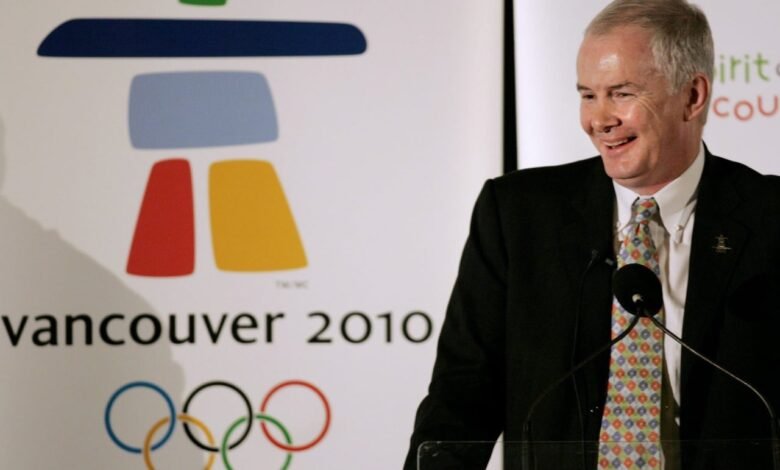
When Vancouver and Whistler bid for the 2010 Winter Games, the cost to the provincial government was pegged at $600 million. In the final post-Olympic tally, that figure had risen to $925 million. That number didn’t include a long list of ancillary costs, the $6 million that provincial and federal governments spent on a pavilion at the Turin Games in 2006, promoting Vancouver/Whistler 2010.
The Vancouver/Whistler bid book, published in 2003, estimated that the overall cost to stage the Games would run roughly $1.3 billion. In December 2010 the local organizing committee issued a report, with numbers calculated by the accounting firm PriceWaterhouseCoopers, adjusting the budget upward, to just under $1.9 billion.
By 2014, when the organizing committee was dissolved, the final numbers, tallied by Ernst and Young, went public, revealing that the 2010 Winter Olympics broke even, leaving no debt to local taxpayers.
“I look at our model and think we are a very good model of how to do these events,” said VANOC CEO John Furlong in a 2014 interview with the CBC. “Being on time and being on budget, and being responsible about the things that really matter to the public.”

In the high-cost world of Olympic Games hosting, not losing money can qualify as a win. And the 2010 Games left a legacy of sports facilities, like the bobsled track in Whistler, and sorely needed infrastructure, like the rail link from the airport and the widening of the Sea-to-Sky highway.
So when Vancouver, Whistler, and several B.C. First Nations groups decided to explore a bid for the 2030 Winter Games, moving forward seemed as straight-forward as an empty-net goal.
Except those major infrastructure projects, while not directly part of the Olympic budget, did factor into the overall cost of hosting the Games, which a University of British Columbia study estimated at $7 billion. So in 2022 the provincial government, bothered by the prospect of high costs, withdrew its support from the potential bid, and the idea never moved forward.
“There’s a much more robust public commentary around the downside [of hosting an Olympic Games],” said Jules Boykoff, a politics and professor at Pacific University in Portland, Ore., who specializes in the politics of sport.
“The Olympics are notorious for etch-a-sketch economics, where they say at the beginning of the process that it’s going to cost this much, and then they get the Olympics and shake up the etch-a-sketch and a much bigger number gets written on it.”
♦♦♦
The IOC is also adjusting to this new reality, and, in an effort to lower the financial and ecological costs of hosting a Games, is prioritizing host cities that either have existing sports infrastructure, or that commit to using temporary venues. That setup aims to avoid expensive venues becoming unused eyesores post-Olympics, and to dodge the drama – like the questions dogging the brand new ice hockey arena in Milano – that ensues when ambitious construction plans meet tight deadlines.
But the Milano-Cortina Games, where long-track speed skating took place on a temporary track inside the Milano Rho Exhibition Centre, also conformed with the current streamlined approach to building new venues. And in 2030 the Winter Games will come to the French Alps, where organizers intend to use facilities left over from previous events, and where the long-track speed skating venue is the only new sports facility currently planned.
Even the big-budget Los Angeles Games, scheduled for the summer of 2028, intends to use existing venues. A split-site opening ceremony will unfold in both SoFi Stadium, the $6.75 billion megavenue that hosts two NFL teams, and the Memorial Coliseum, which will host track and field.

“It’s really set up for cities that already have infrastructure, that have shown that they can do the Games on a break-even basis, or with very modest investment,” O’Reilly says. “Really, you’ve shrunk the pool of potential host cities to megalopolises in developed countries.”
While the move toward repurposing existing buildings into Olympic venues helps avoid the carbon emissions that come with massive construction projects, climate change is also pushing the Olympic movement toward shrinking its environmental footprint.
The 2022 Winter Games in Beijing, for example, generated headlines – most of them negative – over its use of the municipal water supply. Pre-Games snowfall was thin, and February forecasts didn’t look promising, so organizers spent $60 million, and used more than 180 million litres of water supplying human-made snow for freestyle ski and snowboard courses.
A study commissioned by the IOC in 2024 found that by 2050 only half of the previous Winter Olympic host cities would still be cold enough to stage another Games.
“A Winter Olympic host city that has ample snowpack, has cold enough temperatures so that even the snow you’re producing requires less energy, these are baseline requirements,” said Oliver Schofield, executive director of the sport-focused sustainability strategy firm Race to Zero.
“They’re variable year-to-year but they still contribute to the amount of energy and subsequent emissions from hosting a Winter Games. So where you host is important.”

From Vancouver 2010, to Milano Cortina 2026, the struggle for snow at the Olympics is getting real. CBC News meteorologist Johanna Wagstaffe looks at why a rotating venue model might be the future of winter sports, amid the realities of climate change. And, is Whistler ‘climate-stable’ enough to make the cut?
♦♦♦
A collage on WinSport’s web page features a flawless portrait of a ski jump facility. Bright sunshine behind the camera, a clear blue sky behind the tower in the centre of the frame. Between the lens and the subject, a winter wind whips up a thin cloud of powdery snow.
That snapshot reveals so much of what would have made Calgary a strong candidate for 2026. A northern latitude. Pre-existing facilities. Experience hosting the Games. Olympic roots that run deep in the local community; the low-rise towers across the street from WinSport are called The Podium Towers. The Olympics aren’t just something that happened in 1988. They’re part of the city’s personality.
So to the rest of Canada, the decision Calgarians made in 2018 to abandon plans to bid for 2026 might have seemed perplexing. Imagine people in Las Vegas voting against hosting a heavyweight title fight.
But the question went to a plebiscite, and the results sent an emphatic message.
Of the 304,774 votes cast, more than 56 per cent opposed the Olympic bid.
Those numbers highlighted a deep-seated skepticism toward the bid’s budget projections, and weariness toward inevitable cost overruns. Two months ahead of the vote, prominent economists like Trevor Tombe of the University of Calgary pointed out a mismatch between the proposed bid’s budget for the Games and the event’s economic impact.
In 2018 he told the CBC that the $5.2 billion budget estimate was too conservative given potential cost overruns, and that available data didn’t support the bid team’s claim that the Games would generate $7.4 billion in economic benefit.
“To the extent that the economic benefit of hosting a Games is a reason to do it, I would say that’s misplaced motivation,” he said.

A post-plebiscite analysis, co-authored by O’Reilly and published in the journal European Sport Management Quarterly, also revealed that WinSport’s dormant ski jump towers had become a symbol of what could go wrong with a second Calgary Olympics.
The towers are out-of-use and obsolete, and bringing the 2026 Games to town would mean either rebuilding them, or relocating ski jump competitions to Whistler. Both options were expensive, and neither seemed appealing to local voters concerned about funding the venture with their tax dollars.
The report also emphasizes that the social cohesion of the anti-bid campaign, a grassroots movement composed of volunteers with broad and deep local networks, helped them broadcast a clear, coherent, consistent message about what hosting in 2026 would cost. The pro-bid camp had funding and political clout but, the report concludes, couldn’t overcome the widespread perception that an Olympic Games would serve a select group of elites more than it would everyday Calgarians.
A convincing message about the widespread, enduring benefit of hosting the Olympics might have existed but the report points out that most people would struggle to find that narrative in the 5,400-page report the pro-bid side published ahead of the plebiscite.
♦♦♦
Leaving aside the debate over whether the money Olympic hosts spend is a smart investment or simply a sunk cost, bringing the 2026 Winter Games to Calgary would have produced one clear winner:
Canada’s financially burdened amateur sports system.
Before the Games, Canada’s bobsledders warned that funding cuts had led to skyrocketing team fees ($25,000 this season), and left the team unable to afford newer, faster sleds. And afterward, two-time speed skating medallist Laurent Dubreuil joined the chorus of voices calling on the federal government to pour more money into Olympic sports.
“I’ve noticed that each Olympic cycle there are fewer funds available than in the previous cycle, and it’s not because of our results,” Dubreuil, the 500-metre bronze medallist in Milano, told Le Journal de Quebec last week. “We have to realize that we’re heading straight to disaster if that doesn’t change.”
In January the Canadian Olympic Committee announced $500 million in private sector funding, aimed at strengthening national sports organizations, and boosting Canada’s Olympic medal count over the next decade. But hosting the Olympics here in 2026 would have triggered investment years ago – overdue upgrades to the Speed Skating Oval, and a wholesale renovation of a sliding track that was once the busiest on the continent, hosting more than 18,000 runs per year.
Access to an operational practice track would allow Canadians bobsledders to accrue practice time, and build the piloting skills that could help them close the gap on better-funded competitors. This year, Canadians were shut out of the medals in bobsleigh for the first time since 2002.
“Whistler being the only track available makes it more logistically challenging,” said Jesse Lumsden, Bobsled Canada’s high-performance director. “Our shop is here [in Calgary]. We keep our sleds here. Our athletes train out of here, but we can’t utilize the track.”
♦♦♦
As far as the selection process for future Olympic Games is concerned, multi-city bidding wars are, like dollar-a-litre gasoline, a relic from the mid-2000s that’s never coming back. Fewer cities are eager to host the Games, and cities considering a bid know they need to win over local residents first.
“Instead of spending a bunch of money to build new stadiums, can you instead redirect that money to public transportation?” Schofield says. “Can you get high-speed rail or skytrains to major venues and city centres, and bring people together for years to come.”
As for the possibility that the Olympics will return to Canada, 2026 might have represented the best chance, and the next scheduled Olympics without a host are the 2036 Summer Games. The odds might be remote, but O’Reilly says the right bid, with the right message, communicated effectively, has a chance.
Albeit slim.
“That’s a great question. I still think the Nordiques are coming back to Quebec,” he said. “It’ll be a while, but I think they’ll be back in Canada.”
Source link