This is an excerpt from The Buzzer, which is CBC Sports’ daily email newsletter. Stay up to speed on what’s happening in sports by subscribing here.
A key event in the run-up to the Winter Olympics, which are now just four weeks away, is taking place this week with the Canadian figure skating championships in Gatineau, Que.
Competition began yesterday for junior-age athletes. But the elite-level events, starting Friday afternoon, are the focus as they’ll help determine who gets to represent Canada at the Olympics in Italy next month.
Coming off a disappointing 2022 Games in Beijing, where Canada failed to win a figure skating medal for the first time since 1980, the country has earned a total of eight entries in the various events in Milan — three in the ice dance, two in pairs, one each in the men’s and women’s, plus the team competition, which kicks things off on Feb. 6.
The Canadian championships are not like, say, the U.S. track and field trials, where the country’s Olympic spots are completely up for grabs and simply go to the top finishers. Instead, they’re part of an evaluation process that includes the skaters’ overall body of work over the last few seasons. Skate Canada, the sport’s national governing body, will announce its Olympic selections on Sunday evening, shortly after the championships wrap up with the final stage of the ice dance competition.
While it’s safe to say that a few names are already written in pen, some of the blank spaces could very well come down to who performs the best this weekend. And even those who are basically guaranteed a spot on the team will be under pressure to prove to the country — and themselves — that they’re in medal-contending form at their last big competition before the Olympics.

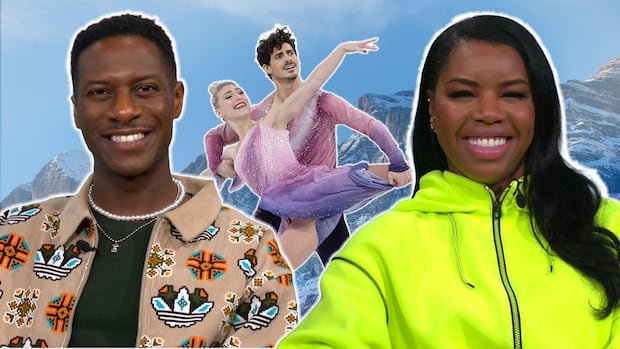
CBC Sports host Perdita Felicien and analyst Asher Hill dig into the highs, the challenges and the future of Canadian figure skating as the Winter Olympics approach.
Who to watch in the partner events
Let’s start with the two sets of skaters who are most definitely going to Milan — ice dancers Piper Gilles and Paul Poirier, and the pairs duo of Deanna Stellato-Dudek and Maxime Deschamps.
Over the last four seasons, these are the only Canadians to reach the podium at the world championships or the Grand Prix Final, which are the two most prestigious annual global events. They’re the country’s best — and, realistically, only — hopes for a medal in the traditional events in Milan, and they’re also expected to be leaders in the team event, where Canada is ranked fourth in the world behind powerhouses the United States and Japan and host Italy.
Stellato-Dudek and Deschamps broke through two seasons ago, taking bronze at the Grand Prix Final before capturing Canada’s first figure skating world title in six years with an electrifying performance in front of a hometown crowd in Montreal. But, since then, they have not delivered in the biggest events. Last season, they withdrew from the Grand Prix Final due to an illness and placed fifth at the world championships in Boston, and this season they finished sixth out of six teams at the Grand Prix Final. It’s fair to wonder whether Father Time is finally catching up with them: Deschamps is 34 and Stellato-Dudek, the oldest woman ever to win a figure skating world title, is 42.
Gilles and Poirier are no spring chickens either: they’re 33 and 34, respectively. But, from an athletic standpoint, ice dancing is less demanding than pairs. And they’ve maintained a remarkable level of consistency, reaching the podium at four of the last five world championships, including silvers at the last two. Though they’ve never captured a world title, Gilles and Poirier did win the Grand Prix Final in 2022 and took bronze in ’23. But they’ve been shut out at the last two Finals, finishing fifth and then fourth last month in Japan, where there was a lot of grumbling about the judging.
Marjorie Lajoie and Zachary Lagha are pretty much a lock for one of the other two Olympic ice dance berths after earning a pair of medals on the Grand Prix circuit this season. They didn’t qualify for the Final, but they finished a career-high fourth at that event last season — one place ahead of Gilles and Poirier. Marie-Jade Lauriault and Romain Le Gac will try to hold off Alicia Fabbri and Paul Ayer for the third Olympic spot.
On the pairs side, back-to-back nationals runners-up Lia Pereira and Trennt Michaud are favoured to get the second Olympic berth over Kelly Ann Laurin and Loucas Éthier, who earned a bronze at the Skate America Grand Prix event this season.
Who to watch in singles
Canada’s chances of winning an Olympic medal in either the men’s or women’s events are essentially zero. No Canadian solo skater has reached a major podium since Kaetlyn Osmond (now retired) won gold at the 2018 world championships, and it’s been eight years since one qualified for the Grand Prix Final. At last year’s world championships, no Canadians cracked the top 10.
Having said that, the singles competitions could deliver the most drama at the national championships because these Olympic spots seem to be truly up for grabs.
The front-runner for the women’s berth is 22-year-old Madeline Schizas, who was fantastic in the team event at the 2022 Olympics, placing third in both her short and free skates to help Canada to a fourth-place finish. But she was 18th in the women’s event and has finished no better than 11th in her five trips to the world championships. The defending national champ could be challenged by 20-year-old Sara-Maude Dupuis, who recently became the first Canadian woman to land a triple axel in international competition.
The men’s event is the toughest to call. It’s shaping up as a battle between 26-year-old reigning Canadian champion Roman Sadovsky and Stephen Gogolev, who just turned 21. Sadovsky competed at the 2022 Olympics, finishing 29th, and is a veteran of three world championships, topping out at 12th. Gogolev has never been to a major, but he was the only Canadian to win a solo Grand Prix medal this season, taking bronze in Finland — one spot ahead of Sadovsky.
Also in the mix is Keegan Messing, a two-time Canadian champion who came out of retirement this summer in hopes of making it to his third Olympics. The 33-year-old has competed in a couple of lower-tier events this season but was not on the Grand Prix circuit.
How to watch
The ongoing junior events and the upcoming elite-level events are all being streamed live on CBCSports.ca and the CBC Sports app. Here’s the schedule for the elites:
- Men’s short: Friday at 4:45 p.m. ET
- Pairs short: Friday at 8:25 p.m. ET
- Ice dance rhythm: Saturday at 10:30 a.m. ET
- Men’s free: Saturday at 1:25 p.m. ET
- Women’s short: Saturday at 5:30 p.m. ET
- Pairs free: Saturday at 8:20 p.m. ET
- Women’s free: Sunday at 11:10 a.m. ET
- Ice dance free: Sunday at 3 p.m. ET
For the complete schedule including the juniors, see the full CBC Sports streaming menu.
For more on the skaters and storylines to watch at the Canadian championships, watch this preview with CBC Sports host Perdita Felicien and figure skating analyst Asher Hill.
Source link


