This is the second installment of a two-part series examining how climate change is threatening the future of winter sport. You can read part one here.
In the seven years since Marion Thénault made the slopes her office, she’s seen the best and worst realities of working outside.
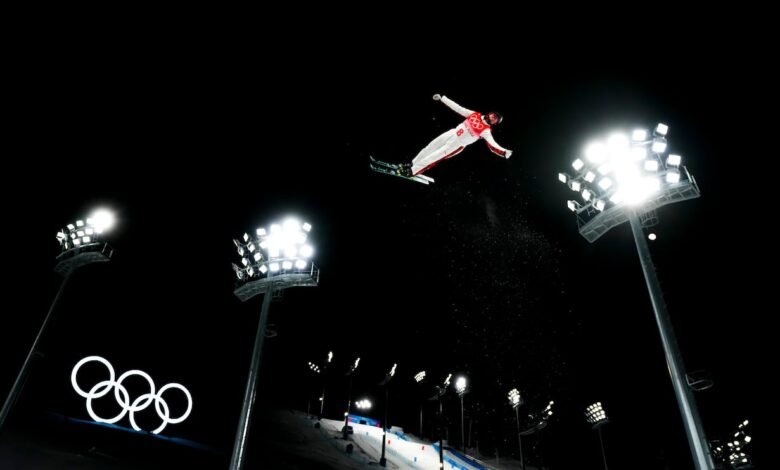
She’s seen beautiful winters and stunning snow, which the freestyle skier relies on to perform intricate jumps and tricks in the aerials discipline.
But she’s also had a front row seat to how climate change has impacted her sport and the world around her. With the planet getting warmer, winter sports like skiing are particularly vulnerable.
Thénault has been to World Cup events where the whole mountain was covered in green grass, except for the fake snow used to manufacture the area for competition — a dramatic contrast that has stuck with her.
“It just feels wrong to be there,” Thénault said in an interview with CBC Sports. “It feels like I’m not welcome in that environment because it’s fake in some way.”
Beyond how it looks, the former gymnast has experienced how climate change can alter performance. Melting snow can impact an aerial skier’s takeoff and speed.

As she launches into the air, every jump requires the most precise measurements and micro adjustments so Thénault knows exactly what to do mid-air and where she will land.
“Working with dry ice makes the jump hold but it also makes the jump slippery and the rest sticky,” she said. “This is a very important thing to get used to when it’s warmer outside. The speed changes more drastically because you’re going to be sticky until it’s compacted, and then when it’s compacted, it’s going to go real fast. It’s a bit more dangerous in that way that it’s not as consistent.”
A 2024 study commissioned by the International Olympic Committee found the number of locations with the weather to host the Winter Olympic and Paralympic Games is shrinking rapidly. It found just half of the 21 previous Olympic host cities would be suitable to host by the 2050s, due to climate change.
It’s an existential threat, but it’s not far off in the distance. Athletes who rely on the natural environment, like Thénault, are seeing the impact of climate change now and are speaking out about it.
For them, it’s about more than preserving a sport. It’s about protecting unique and special places in our country.
“I depend on snow coverage for my job,” Thénault said. “But also, we have a window on what’s happening in the mountains, and it’s my responsibility to tell the world about it.”
For Thénault, that advocacy started after she returned from the Beijing Olympics with a bronze medal. It was that striking contrast of green and white that propelled her into action. The more she learned, the more she understood and the more she felt compelled to do.
- This Saturday, Just Asking wants to know: What questions do you have about Canada’s role in global climate change action? Fill out this form and send us your questions.
She’s set a goal to make her journey to next February’s Olympics carbon neutral. To do that, she’s been working with an engineering and consulting firm to help quantify her carbon footprint as an athlete.
Last month, she was one of 77 Canadian athletes with the climate advocacy group, Protect Our Winters, to sign a letter to Prime Minister Mark Carney, calling for swift action to combat climate change.
It’s a global issue, one that’s the subject of talks among world leaders at the UN Climate Conference, COP30, that’s underway now.

But for Thénault and the other athletes who signed the letter to the prime minister, the path forward starts with making climate a top priority.
“Our athletes’ message is simple,” a statement from Protect Our Winters says.
“As Canada tackles affordability, housing, the economy, and health care, climate change must remain a priority including strengthening our commitments to meeting Canada’s climate targets. Our athletes are the ones seeing the stakes firsthand and that is what is motivating them to protect the places and experiences we love.”
Rotating venues for Winter Olympics
The biggest sporting organization on the planet, the International Olympic Committee, has pledged to reduce its direct and indirect emissions by 50 per cent by 2030, in line with the Paris Agreement.
As the IOC moves away from building new venues that sit empty for years after the Games, organizers have been encouraged to use buildings that already exist or to build temporary venues. At the 2024 Summer Games in Paris, 95 per cent of the venues were pre-existing or temporary.
But athletes from across the globe have been concerned about whether the IOC has done enough to address climate change and advocate for bold climate action.
One IOC presidential candidate, Johan Eliasch, made sustainability the centrepiece of his platform.
Eliasch, who is the president of the International Ski and Snowboard Federation (FIS), pitched rotating the Winter Olympic Games between a limited number of permanent venues.
It’s a scenario that may eventually become necessary, with fewer countries able to host the Winter Games, but Eliasch would like to see it expedited.

With a changing climate, instability and economic considerations, what does the future of ski and snowboard sport look like? Our Karissa Donkin looks for answers from the International Ski and Snowboard Federation (FIS) president Johan Eliasch.
“It’s super important that we preserve what we have,” Eliasch said in an interview last month. “This is not only about skiing. It’s about everything we do. There is only one planet.”
Eliasch, who lost the presidential election to Kirsty Coventry, believes the idea of rotating the Winter Games through permanent venues has traction at the IOC. The problem, he said, is how to award those games. Should there be a vote or a set rotation?
“It is something that is [being] looked at,” Eliasch said.
Coventry’s platform talked about championing sustainable development, but didn’t provide many specifics on how she might do that.
Still, Eliasch said he gets the sense that climate is a priority for the new president, who officially took the top job in June.
“We’ve had conversations about it,” he said. “Definitely she takes it very seriously. I’m sure she will not only prioritize but she will make a difference.”
For more than 400 Olympians, who signed a letter to all IOC presidential candidates earlier this year, stronger action is needed and time will tell whether the new IOC leadership will deliver that.
That letter called for “a strengthening of the IOC’s existing commitments to cut carbon emissions” and setting standards around big-polluting sponsors. Neither appeared in Coventry’s platform.
Athletes looking for more urgency
Olympian sprint kayaker Adam van Koeverden was one of the athletes who signed the open letter to IOC presidential candidates back in March.
In a press release about the letter, van Koeverden called for “bold leadership that safeguards both the future of the Games and the well-being of communities worldwide.”

Back in Canada, van Koeverden is the country’s Secretary of Sport, meaning he has the ability to take athletes’ climate concerns directly to the prime minister. That includes the concerns raised by Canadian athletes in the letter to Carney last month.
He pointed to “an enhanced industrial carbon price and clear methane regulations,” both of which were part of the most recent budget, as measures that address two issues he said he’s heard most often from environmental organizations. The Liberal government ended the consumer carbon pricing system earlier this year.
“Climate change is having an impact on sport, and we’ve got to make sure that we’re fighting climate change because it’s all about our economy, our health and our communities,” he told CBC Sports. “It’s not a distant threat. It’s right here.”
But Thénault has felt like climate change has taken a backseat in the political conversation, whether that’s within the IOC or during the last Canadian federal election.
For her, it’s more urgent than that.
“I’ve heard the sentence a lot: environmental action is a topic for when everything else is going well,” she said. “But I don’t think that should be the case, and I think that’s a little bit of what’s happening right now.”
Source link