When the Canadian Paralympic Committee (CPC) announced in 2024 that Canada’s Paralympic medallists would be receiving money alongside their hardware for the first time, longtime Para hockey team member Tyler McGregor thought it was a welcome change.
“My initial thoughts were like it’s incredible,” he said. “And for so many reasons. I think it’s both beneficial for aspiring athletes and people in pursuit of their Paralympic dreams.”
Those payments, known as the Paralympic Performance Recognition Program, mean $20,000 for gold, $15,000 for silver, and $10,000 for bronze. They were made possible after a $4-million donation from healthcare entrepreneur Sanjay Malaviya via his foundation, funding from the Government of Canada, and investment from the Canadian Paralympic Foundation.
At the time, the CPC hailed the funding as a vast improvement, as did then Minister for Sport and Physical Activity, Carla Qualtrough, a former Paralympian herself.
“This is a very welcome initiative and a game changer for Paralympic sport in Canada, recognizing the incredible amount of work, commitment, and resources required to compete at a world-class level,” Qualtrough said as part of the CPC’s press release.
According to statements from the CPC, Paris 2024 medallists received $535,000 and 2026 Milano-Cortina medallists received $555,000. There is no such program for Commonwealth Games medallists.
When McGregor was asked about what he spent his money on after the team captured silver in the most recent Paralympic Games in Milano-Cortina, it wasn’t anything extravagant.
“I’m actually really good in terms of money management. So, I haven’t spent it yet,” Mcgregor said, “ However, I will say in about a month, it’ll probably all be gone. When we have our wedding, we’re looking forward to hosting all of our loved ones and celebrating with them…that hit the bank account and it was earmarked for the wedding right away.”
However, medal payments are just the tip of the financial iceberg facing elite Para sport athletes in Canada, and there are questions being asked about whether medal payments are the best pathway to equity.

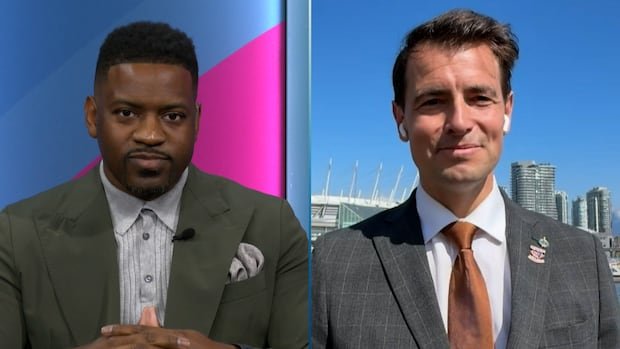
Canada’s Secretary of State (Sport) joined CBC Sports’ Donnovan Bennett to discuss the Spring Economic Update 2026 which has proposed to provide $755 million over five years, starting in 2026-27, and $118 million ongoing, to Canadian Heritage to support Canada’s sport system.
State of Paralympic finances
Canadian Paralympians are often in a difficult financial position. Their lives, as athletes with disabilities, are often more expensive than for their non-disabled counterparts.Their equipment is costly — McGregor says the sled he competes in costs approximately $10,000 – and they’re often travelling far distances just to train.
While Sport Canada’s athlete assistance funding, commonly known as carding money, exists (a senior card currently means $2,175 a month), and provincial equivalents operate in provinces like Ontario and Quebec, that funding doesn’t keep pace with a Paralympic athletes’ cost of living in many cases. In addition, the medal payments are not tax free and some Paralympians struggle to access regular funding due to provincial disability income limits.
Dr. Andrea Bundon is an associate professor at the University of British Columbia, and a former guide for two Paralympians, who studies the sociology of sport. She said that the fragmentation of resources across the Canadian sporting landscape makes money conversations difficult to navigate.
“I don’t know how much the Canadian public knows about these particular arrangements and how much we should really expect the Canadian public to know.” Bundon said.
As for the fragmentation, there is the long list of funding programs for Olympic and Paralympic athletes, two separate foundations that shepherd different pools of money, various national sporting organizations (some of which are integrated with Para athletes, some of which aren’t) and two different organizational structures.
Beyond that, there are sporting events where Para athletes compete during the same time frame, like at the Commonwealth Games, and times when athletes compete entirely separately. Bundon said this means that it’s not always clear to people giving money to these organizations where their donation is going. “They might think they are supporting Paralympic athletes and be quite surprised to learn that it’s not the case,” Bundon said.
These medal payments come at the same time as the recent publication of the Future of Sport in Canada report, which labelled the sporting model in Canada as “broken” and said that Para athletes faced “comparable, yet more complex challenges” when it comes to how these sports — and thus their finances — are structured.
Bundon pointed out that the report does not make any mention of ableism — the discrimination against people based on ability — which is a frequent topic of discussion in Para sport circles and underpins a lot of financial and employment inequity in Canada.
“That Future of Sport Commission does talk about the harms experienced by marginalized groups or underrepresented groups, but it doesn’t actually talk about needing to think about how the system is set up to exclude some folks. And I think you could tie that back to the fact that we don’t consider the financial circumstances of Para athletes as something separate from or particularly distinct from our Olympic athletes.”
Wheelchair curler Ina Forrest, another medallist at the 2026 Paralympic Games, said that the financial realities for Paralympians have shifted since she joined the national curling program in 2007 as training requirements have increased.
“I think the time requirement is almost making it impossible for athletes to have that full-time job that they can apply themselves to because so much effort and time is put into training and travelling.,” Forrest said,
She said that medal payments show, in her mind, that athletes’ contributions are being better recognized. “You just have to be really thankful that somebody values Paralympic sport enough to make that big donation.As for what she spent her medal payment on, it too was nothing out of the ordinary.
“Just general living expenses. We did go on a holiday after [the] Paralympics with my whole family. So, you know, some of the money that we spent there, certainly the $20,000 can go towards that celebratory trip.”

Athlete retention
Another aspect of these payments, according to athletes like McGregor, is that it can help retain athletes who may not see a pathway to financial sustainability.
“As someone who’s getting married in about a month and trying to pay bills and start a family soon. It’s allowed me to be able to do that and gave me the freedom to continue to pursue my dreams and do so in a way that alleviates a lot of stress for me, but also for my loved ones who are there to support every step of the journey.”
That, Bundon says, is a double edged sword as research has uncovered a sizeable number of athletes who are staying in their sport because there is no viable offramp, despite support services from the CPC, like Game Plan, being in place.
“We are seeing some Para athletes who are perhaps staying in sport longer than they want to or beyond what might be expected because they are so worried about what their lives will be outside of sport,” she said.
“We can talk about how insufficient the sport funding is, but when you look at the rates of unemployment and underemployment of disabled people, having that sport funding might seem pretty secure compared to your other options. And yet that’s largely not being acknowledged or discussed.”
Forrest said that she hopes for a system where athletes can be less self-reliant on their own personal marketing when it comes to creating additional income streams and earning a living from their life in sport.
She believes that part of that is the added exposure that a Paralympic year provides. “I feel like this Paralympic, the coverage that we had through CBC, I think just the effect of social media, people putting their sports out there a little bit more, that there is just a greater awareness and appreciation and enjoyment of Paralympic sports,” Forrest said.
“So, I definitely think it’s gone in a direction that would help people try to find sponsors, whether that stands up over a four-year cycle or if that’s just a one-off because Paralympics came and happened, people watched it, and then you’re forgotten again for four years. I don’t know, but it certainly did have a lot more momentum.”
Source link