Legacy is a word that has been thrown around ahead of the FIFA men’s World Cup. Soccer is the most played youth sport in Canada and this month’s event is a great opportunity to build and amplify the sport in a country known more for greatness on ice than on a grassy pitch.
With Canada Soccer set to receive a $9.8 million boost toward the building of a national training and development centre, there are plans to build the sport and continue on construction projects to renovate and update existing stadia.
Canada Soccer has admitted there has been a gap in Canada. “For years, Canada has been one of the few major soccer nations in the world without a dedicated national training centre,” Canada Soccer president Peter Augruso said. “At a time where the game is growing rapidly across every corner of this country, this gap has become impossible to ignore.”
There have been initiatives such as the “Soccer for All Legacy Program,” the Canadian Tire Jumpstart Charities and the federal government committing to build 25 pitches across Canada.
There will be massive amounts of media attention for a men’s World Cup at home, with an abundance of stories and experiences that become core memories for fans in Canada. The men’s team is getting a lot of attention, with storylines surrounding the recently named squad and how head coach Jesse Marsch will lead the team during the tournament. There are hopes and dreams connected to Canada’s performance, though not exclusively for the men’s game. Women and girls are sharing their own hopes and dreams.

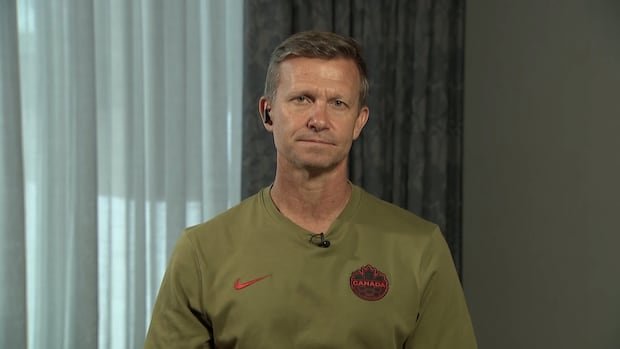
Canada head coach Jesse Marsch joins Soccer North to discuss his final World Cup squad and the difficult decisions that went into selecting the roster. Marsch explains what he values most in his players, the identity of this Canadian team, and how the group has evolved since the 2022 World Cup.
How will the legacy affect the women’s game in Canada? Canada is continuing to gain attention with home-grown stars such as Olivia Smith and Kadeisha Buchanan tearing up pitches in England with the Women’s Super League. Meanwhile in Canada, we are in the second season of the Northern Super League (NSL).
Sydney Kennedy, who plays for the Halifax Tides, is a proud Nova Scotian who played her undergraduate career at the University of Florida, and also played a year at Acadia University. I asked Kennedy what she hoped could be the result of all this attention on men’s soccer in Canada.
“Even though it’s the men’s World Cup, young girls and women will still be watching and dreaming of one day playing on that stage themselves, just like I did growing up watching both the men’s and women’s World Cups,” the 25-year-old said. “I hope the excitement around the World Cup continues long after it is over and helps grow the women’s game in Canada even more.”
Diana Matheson is the NSL founder and a Canadian soccer legend. I asked he what she wants and expects from the men’s World Cup.
“For the past two years, every time someone has asked me what the legacy of this World Cup should be, my answer has been the same: soccer infrastructure,” she said. “More fields. More mid-sized stadiums. Right now, Canada has one mid-sized stadium — between 8,000 and 18,000 seats — for every eight million people.
“In countries like Sweden, Japan and Australia, it’s closer to one for every 500,000. We’re newer to the game, so that gap is understandable, but hosting the World Cup is exactly the moment to start closing it.”

Kevin Blue, the CEO of Canada Soccer, agrees with Matheson that now is the time to close those gaps.
“One of the most important next steps for the sport in Canada is the continued development of appropriately sized soccer-specific stadiums and community infrastructure across the country — facilities that can sustainably support professional men’s and women’s clubs, create better matchday environments, and help deepen the connection between teams and their local communities,” he said.
“The momentum surrounding both the men’s World Cup and the upcoming women’s World Cup (next year in Brazil) has reinforced the importance of investing not only in elite performance, but also in the broader ecosystem that will help the game continue growing long after these tournaments conclude.”
It is true that legacy does not rely on stadiums or training centres alone. Dare I say that previously, there had been a painful lack of vision and support for the growth of women’s soccer in Canada.
Yes, we need a national development centre and opportunities for women to have dedicated spaces for professional growth at a club or regional and provincial programs. USport, League One/ Premier Leagues and even grassroots initiatives offer a chance for a girl to realize her dreams whether she is in northern B.C., central Alberta, or Newfoundland.
Moreover, if professional women’s leagues in Canada do not have a proper home, or share a facility and are at the mercy of bigger and well-established men’s leagues, what does that do for the legacy of women’s soccer?
Matheson says legacy is also about building a sustainable soccer economy in Canada. She says that Canadian investors continuing to back clubs and leagues is essential; Canadian corporate partners need to recognize the momentum behind women’s sports.
Broadcasters and media companies telling the stories and helping grow visibility and audiences, and fans continuing to attend matches and supporting the game week after week is what punctuates that legacy.
“Infrastructure creates the foundation, but thriving clubs and packed stands are what bring the sport to life,” she said.
Kennedy remains hopeful that the NSL will catch more eyes. “Once people become more invested in soccer overall, they start paying attention to the domestic game, too,” she said.
The push to recognize that soccer dreams in Canada are not gendered is necessary. I hope that along with the success of the men’s World Cup, this country continues to feed on positive energy around soccer, and continues to love the game — especially when it is played by women.
Source link