When Canada played South Africa in Los Angeles last week, I marvelled at the red sea of supporters from Canada.
A very large swath from Les Voyageurs Canada’s supporters group had turned up. It was something the players and the program noted appreciated. The role of the fans during this men’s World Cup is immense. The experiences of joy, grief, and connection are intrinsic to the tournament.
Fans are not simply pawns in a money-scheme but they add character, flair, joy and humanity to matches. I’ve been to several matches in Toronto and the fans are marinated in possibility and love with a very healthy chunk of nationalism.
After Canada’s first match against Bosnia at Toronto Stadium, Alistair Johnson said that he not only appreciated the fans turning up and it felt like the equalizer against Bosnia was “pulled into the net” because of the fans’ energy.
The world’s most beloved game requires the world and needs fans to be present.
This tournament has not been without political complications and unfair policies directed at certain teams like Haiti or Iran who have had their mobility slashed and access for staff obstructed, not to mention the lack of entry for Omar Artan, a FIFA-qualified Somali official.
If players and officials are thus treated, imagine how little regard there is for fans from those nations?
I asked Dr. Whitney Bragagnolo, a Canadian Sports Ethicist about Canada’s perception versus reality.
“The visa story is bigger than Canada, it reveals the limits of what even the world’s biggest sporting event can guarantee,” she told CBC Sports.
“FIFA organizes the tournament, but governments determine who gets to experience it in person. The World Cup can invite the world to participate, but governments decide who can accept that invitation.”
WATCH | FIFA’s World Cup hypocrisy:
The United States has been under so much scrutiny but what about Canada? A soccer-nation that values its own fans would certainly want others from different countries to attend. How does Canada fare?
Last week a news story reported that less than half the visa applications to Canada were accepted. There are several layers to how applications are processed and considered.
Applicants from countries only requiring an electronic travel authorization (eTA) from European nations, British territories and a few notable exceptions (UAE, Qatar, Singapore) were facilitated. For the applicants requiring an old-fashioned visa, the results did not fare well.
“Overall, citizens of countries that require eTAs to enter Canada had an approval rate of 96 per cent, compared to just 32 per cent for those that need a visa,” the report stated.
Those numbers seemed alarming to me. I asked Immigration, Refugees and Citizenship Canada (IRCC) about the process and for them to clarify. If Canada was co-hosting the world’s game, wouldn’t they want the world to attend? An IRCC spokesperson told me that “each visa application is assessed on a case-by-case basis.”
There are reasons why some applicants may be rejected and they range from criminality to misrepresentation to health grounds.
Fan, media process used to be ‘a lot easier’
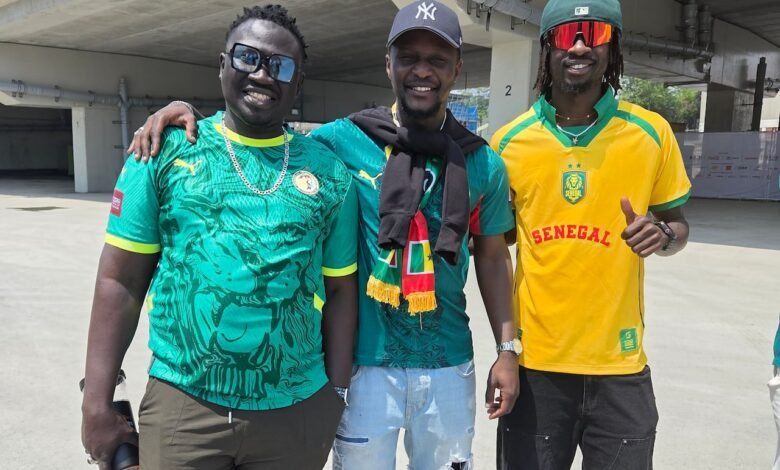
On June 26, I attended the Senegal-Iraq match, and while the stadium was full of delighted Iraqi fans — thousands who made their way from other parts of Canada, Michigan, and New York — I looked for enthralled Senegalese supporters.
I spoke with fans covered in yellow, supporting the lions of Teranga, and every person I chatted with had come from Quebec, or was already living in Canada. Anecdotally, they all confirmed that anyone they know in their circles who had applied from Senegal did not have a visa approved.
In the media centre, I met with colleagues from Senegal and asked them about the crowds and supporters. According to international journalists, expenses and resources are the biggest barrier to men’s World Cup access in Canada.
Amadou, a senior media member from Senegal, told me that many journalists received a one-time entry into the United States and if they chose to travel to Canada to cover the match, they would not be permitted to re-enter the U.S. Bizarre rules for a tournament that is co-hosting with two other countries.
Amadou covered his first men’s World Cup in 2002 and despite the tournament taking place in Japan and South Korea, a singular visa system was created for media, players and people requiring to travel for work back and forth. “It was a lot easier,” he said.
He told me he was happy to be in Canada and would be spending time with family in Quebec and can cover the matches remotely.

An argument can be made that for countries not actually competing in the World Cup, like Pakistan or Nigeria, the urgency is not the same. But Ghana did play in Toronto and according to the numbers of 1,725 applications only 185 were approved.
Senegal had a mere 170 applications with 25 approvals.
While Haiti did compete, they did not have a World Cup match in Canada. There were 610 applications and 35 approvals. Perhaps fans wanted to be in larger communities of Haitians if they could not afford tickets, and Montreal boasts a large population.
IRCC did reiterate that it is important to note that the number of travel documents processed by the end of March 2026 does not represent the total number of visitors expected for the tournament.
Global tournament, national access
Some travellers already hold valid travel documents, such as an eTA or multiple-entry temporary resident visa, and visitors from the United States. In addition, the data only captures applicants who chose to indicate “FIFA World Cup 26” in their application. According to IRCC this was encouraged but not mandatory.
Bragagnolo says that states have every right to determine who enters their borders, and the IRCC data remind us that access to the world’s biggest sporting event is shaped by far more than sport alone.
“The World Cup is designed to bring fans together from around the world, yet participation as a fan is still shaped by passports, visa systems, and government decisions,” she said. “The tournament may be global, but access to it remains profoundly national.”
During the Senegal-Iraq match it struck me how many fans from Iraq were from Canada or the U.S. and not from Iraq; 65 applications and only 10 approved.
Yes, the stadium was full of Iraqi pride but having Iraqis who are expats with privileged passports is significantly different than opening up the opportunity for people from those actual countries.
Is football uniting the world or using a framework that excludes sincere fans? While FIFA can guarantee a global tournament, it cannot offer global access. And that is specifically what is required.
The joy and magic of any World Cup is having the tournament enveloped in the very people who breathe life into it — irrespective of their passport.
Source link