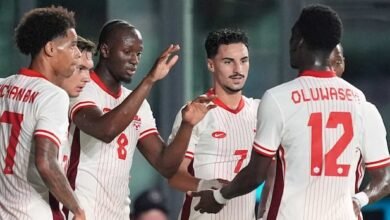
World Cup might not unite the world, but it does offer chance to view things through someone else’s eyes

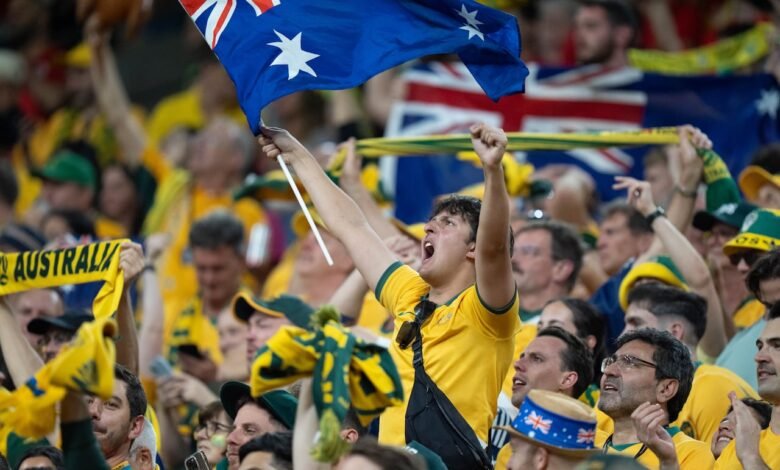
Australia playing Turkey in a group-stage match might not seem like a thriller for neutrals. It’s the sort of game that the World Cup’s expansion from 32 teams to 48 requires. But for Australians and Turks, it meant the world to be in Vancouver on Saturday night.
BC Place was as loud as Toronto Stadium was for Canada’s opener the day before. The noise was the first reminder that the game had the same stakes for them as Friday’s did for us.
This summer’s World Cup is the biggest by nearly every conceivable measure, good and bad. It’s being hosted by three countries for the first time, and they aren’t really getting along.
Tickets have never been more expensive. A beer costs $22. Some teams and their fans will have to cover thousands of miles. (The Bosnians who were in Toronto on Friday will play in Los Angeles this week, and Seattle the next, a prohibitive commitment for most.)
FIFA, the World Cup’s brazen profiteers, will collect something like US$9 billion this year, US$13 billion for the cycle.
That’s about half the estimated GDP of Haiti, one of the participants.

But scattered against that pitch-black backdrop, a record 104 games will shine like constellations. Some, like stars themselves, will be brighter than others. The 2022 final drew 1.5 billion viewers, and this year’s will draw at least as many. The other 103, even those lost a little in the margins, will still matter, very much, to tens of millions.
“Football unites the world,” Gianni Infantino, FIFA’s president, likes to say. He especially likes to say it when he’s being criticized for another chisel, for another misguided or craven scheme.
It doesn’t unite the world, of course. All our divisions that existed before will exist after.
But it does do something special to us — and for us — if only for a little while.

When the Socceroos ran out for their warmups and Wolfmother and AC/DC tore from the loudspeakers at BC Place, and the thousands of fans dressed in yellow began cheering, it didn’t take much to imagine their excitement as your own.
When the equally passionate Turks welcomed their wet-eyed players as favourite sons, it was easy to adopt them as your own, too.
And then came the beautiful moment of shared experience that soccer almost always delivers.
Midway through the first half of a frenetic, blistering game, the Australians mustered a quick counter. Nestory Irankunda, a 20-year-old with a story like so many soccer stories — a Burundian refugee, born in Tanzania, whose family escaped to Australia when he was a baby — streaked down the centre of the pitch with the ball and the world at his feet.
He scored, because for a lucky few, soccer will act like grace and decide to balance life’s crueller ledgers.
His countrymen in the stands screamed at once and leapt into each other’s arms, like the invisible millions who were no doubt rattling windows on every continent, in every time zone.
Across from them, thousands of Turks stared in disbelief, the way millions of others stood in their suddenly silent living rooms, willing a different reality to flash across their TVs.

A cascade of emotions spilled around the world and back again, like water finding its level, and it was impossible not to feel it wash over you. When the jubilant Australians held on to win, 2-0, it was impossible not to share their joy in that, too.
At its worst, the World Cup is hard to like. It’s a crass and obvious exercise in predatory economics. FIFA’s leadership knows there is no price that people won’t pay for love, and it gets away with everything mean that it does because every one of its sins will be forgotten as soon as the soccer starts.
It’s almost too bad, because nothing will change for the better until fans remember the costs of their allegiance as clearly as they remember its rewards. Pay $22 for a beer this year, and they’ll be $26 four years from now.

Soccer North hosts Donnovan Bennett and Amy Walsh discuss Canada’s opening match against Bosnia-Herzegovina at the FIFA World Cup and are joined by guest Kyle Bekker from Forge FC.
But at its best, this glorious league of nations is the world’s biggest empathy machine.
It fills Toronto’s streets with Canadians and Bosnians, pooling together like mercury. It motivates the University of Kansas marching band to learn the Algerian national anthem. It shows Brazilians and Moroccans that they share more than opposite sides of an ocean. It inspires Mexicans to dance to Gangnam Style.
There are no neutrals at the World Cup, and there are never any meaningless games. For 90 minutes at a time, each one gives us the chance to look at something through someone else’s eyes. It lets us feel what they feel.
And for one priceless night in Vancouver, that felt pretty great.
Source link