Fed up with World Cup goals called offside for a stray toe or two? A Canadian soccer trial could fix that

It’s one of the most deflating feelings for any soccer fan.
An attacker for your team receives a pass and they’re running clean through on goal. They stroke the ball past the goalkeeper into the net and wheel away in celebration as they’re mobbed by teammates. The fans in the stadium, in bars, at home, go crazy.
Until the players’ expressions suddenly change and the camera cuts to the assistant referee with their flag in the air.
Offside. No goal. Really?
The offside rule has been maligned as one of the most difficult rules to understand in soccer —and it’s come under far more scrutiny during this year’s World Cup.
It’s better explained visually, but in essence: if an attacking player receives the ball and they are between the second-last and last defending player at the moment the pass is made, they are offside.
That call is usually made by one of the assistant referees on the sidelines, who raises a flag to alert the on-field referee. Generally, it will also be reviewed by the video assistant referee (VAR), who uses digital renderings of the players involved to determine an offside line across the breadth of the pitch.
VAR’s involvement means the margins of offside calls have become increasingly fine — something that has been very apparent at the ongoing FIFA World Cup 2026.
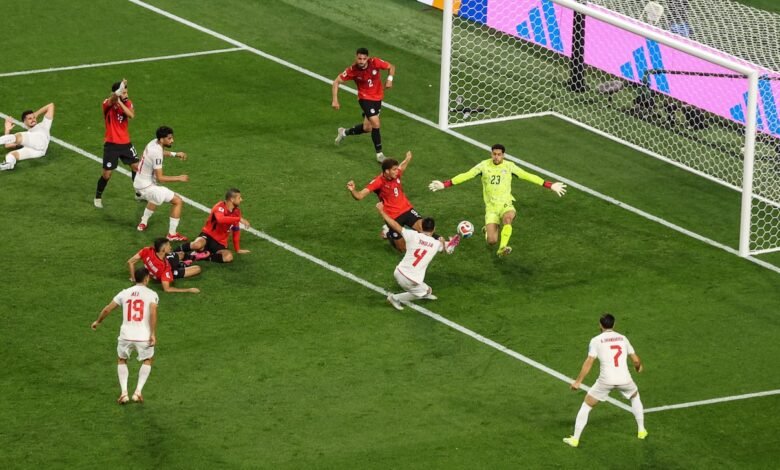
Witness Cristiano Ronaldo’s goal against Croatia that was disallowed because one of the Portuguese legend’s shoulders had strayed offside. Spare a thought for Colombia’s Davinson Sánchez and Iran’s Shoja Khalilzadeh, who were both denied last-minute goals (against Portugal and Egypt, respectively) because their toes had sneaked beyond VAR’s unforgiving offside line.
They need to adjust the rule to where if there is clearly no competitive advantage they shouldn’t call offsides. Having his toes offsides is no different than if they were onside. pic.twitter.com/iwAdM4oUP6
Such granular judgment calls have been widely criticized — not just by fans but also analysts and other neutral observers — for sucking the immediacy, momentum and joy out of soccer. Many fear technology is increasingly deciding the outcome of games instead of the players.
But the Canadian Premier League (CPL) believes it’s at the forefront of the solution.
Since April, the country’s top-flight men’s soccer league has been trialling what has been called the “daylight” offside rule in a bid to give more impetus to goal scorers.
17 World Cup goals that never were
The daylight rule is so called because an offside call is only given if there’s a clear gap between the attacker and the second-last defending player — allowing the attacker to be closer to goal when the ball is passed.
The CPL recently pointed out how the amended rule would have resulted in 17 more goals in the 2026 World Cup, up to the Round of 32 matches — including the Portugal vs. Croatia clash that saw four disallowed goals in total (two would have been given under the daylight rule, including Ronaldo’s).

The results of the trial, which is being run in co-operation with FIFA, aren’t yet known, with the CPL season only at the halfway point. But the league is hopeful it will result in more attacking soccer and, ultimately, more goals.
CPL executive vice-president Costa Smyrniotis says the trial aims “to set the rule right, in a way that I think is a little bit more fair, more understandable, and ultimately, if all goes well, gives a little bit of the advantage back to the attacker, which also creates a little bit more excitement and entertainment in our game.”
Smyrniotis, who was at the Portugal-Croatia match in Toronto, is hopeful the trial will become permanent for the CPL before spreading to other leagues and the international game.
‘You want to see goals’
There appears to be enthusiasm for the rule change outside the league, as well.
“Do it!” is Bob Lenarduzzi’s reply when asked if daylight offside should be introduced across the sport.
“What do you want to see when you come to a match? You want to see goals,” said the former Canadian national team player and coach.
“It’s better for the consumer, better for the people that watch games — and it might be more difficult for the defenders initially, but they’ll figure it out, right?” added Lenarduzzi, a former defender himself.

Canada’s 2026 FIFA World Cup campaign was a defining moment for Canadian soccer. This video essay explores the players, matches and unforgettable moments that united a nation and helped reshape the future of the sport in Canada.
A strong advocate for VAR in the sport, Lenarduzzi says the fact that 17 disallowed goals at this World Cup would have stood under the daylight rule is eye-opening.
“That’s a lot of excitement that you’ve just killed.… And the era that we’re in, it’s created the opportunity for all the [technology] naysayers to just say, here we go, look at this, it’s impacting the game,” says the soccer hall of famer.
Criticism of technology’s use during this World Cup has ranged from charges of overreach and inconsistency of application, to claims that VAR was being used to favour certain teams — most notably from Egypt’s coach and players following several decisive calls and non-calls in their Round of 16 defeat to Argentina.
Lenarduzzi cautions that FIFA is a conservative organization and doesn’t easily embrace changes to the laws of the game, so we might not see a sport-wide change to the offside rule any time soon.
But it’s happened in the past: those of a certain age will remember the days before the back-pass rule, when large chunks of soccer matches involved defenders passing the ball back to the goalkeeper.
Forbidding the goalkeeper from picking up the ball from a back pass sped up the game, says Lenarduzzi, who has several other ideas for making soccer more exciting: for example, an equivalent of basketball’s “over and back” rule, offside lines 35 yards from either goal and a dedicated timekeeper to stop the clock for injuries.
For now, the daylight offside rule is a “good step forward,” he says.
“How much does it impact the game from a negative point of view? In my opinion, none at all.”